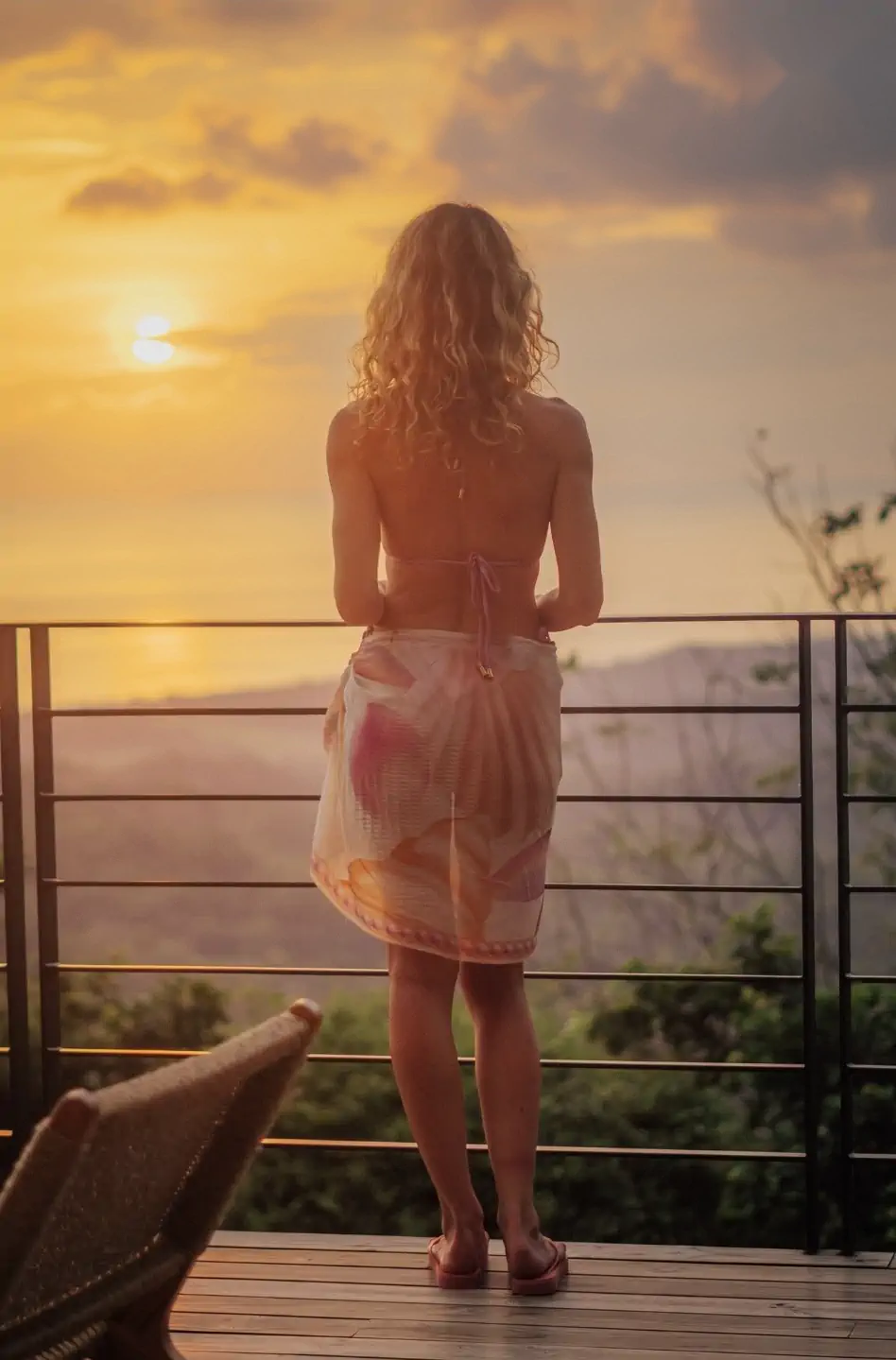
Learn to Surf Over 40: Start Surfing at 40 in Costa Rica
You can learn to surf over 40, and 99% of guests at Lamangata Luxury Surf Resort stand up on a board before they leave. You rehearse the pop-up in our infinity lap pool with head coach Junior, paddle out at the break that suits your level, then watch the video analysis that evening to see what to change tomorrow.
Emily wanted to learn to surf for more than twenty years before she finally booked a week at Lamangata. She arrived unsure whether she had left it too late, and she went home saying she “could not have asked for a better first experience.”
We hear a version of her story most weeks: someone with a full calendar, a job that eats it, and a sneaky suspicion that the window for learning something like surfing closed at around thirty. Then comes a Tuesday morning at Dominical with Junior, the first wave of their life, a holler loud enough that the whole beach hears it, and the question flips from whether they can surf to why they waited so long to try.
Let’s get into the practical stuff: how fit you need to be to surf over 40, which breaks you’ll surf, and what a week of coaching with Junior does for someone who has never stood on a board.
Are you too old to learn to surf past 40?
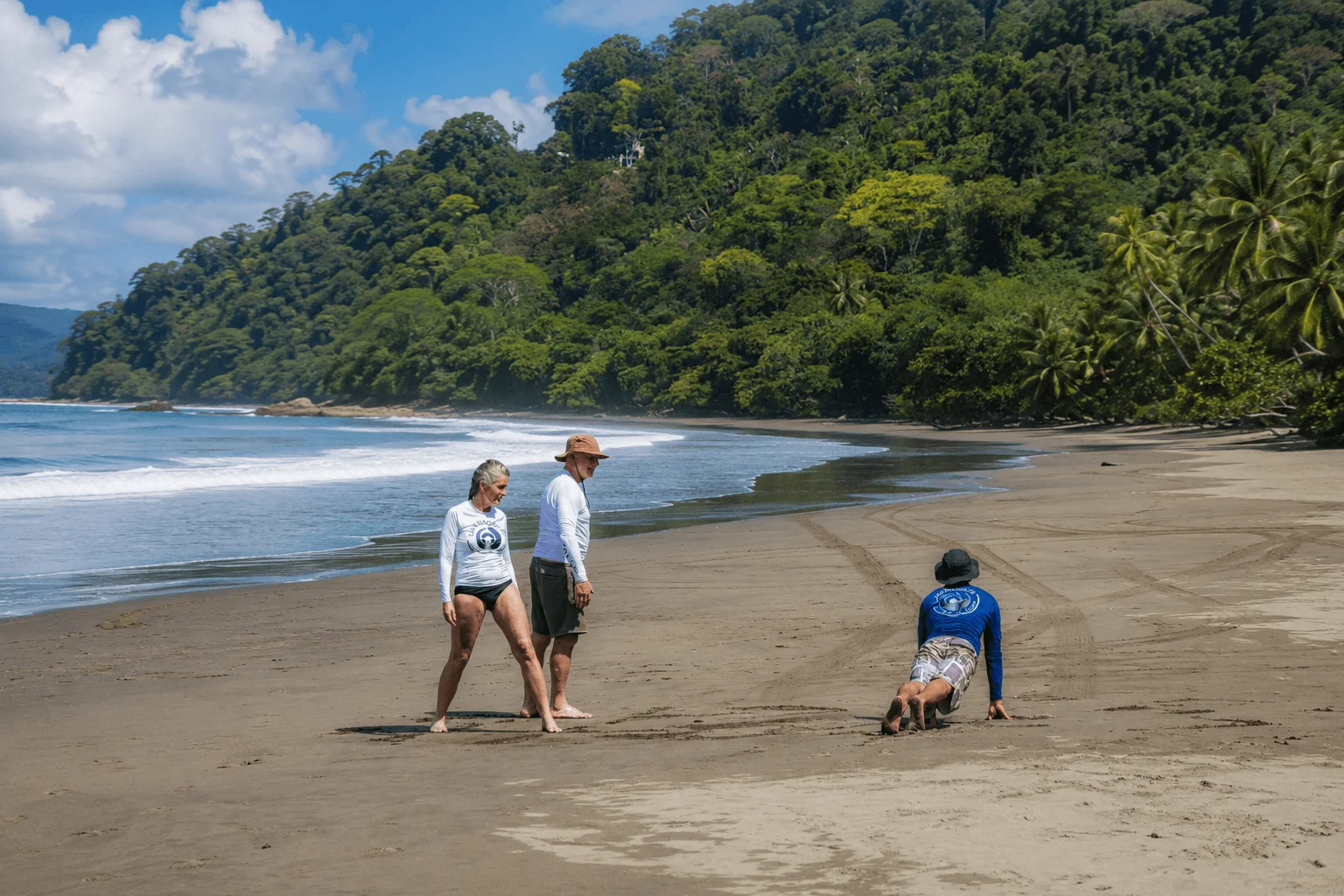
Absolutely not! Adults tend to progress faster than they expect. All you have to do is listen, stay patient with yourself on the days it does not click, and let yourself look clumsy for a while. Everybody falls off, over and over, and most people learn faster once they stop trying to look good doing it. If you’re anything like us, caring less about what people think gets easier as you get older!
Surfing at 40 usually comes with more patience and a smaller ego, and both of those are worth more in the water than a decade of youth. We coach guests in their 30s, their 40s, and their 50s and beyond, and the age of 40 has never been the line where progress stops. The physical demand is lower than most people picture, too. On the calmer breaks Junior picks for a first lesson, you spend your time lying down, paddling, and standing up on a wide board, which is achievable for anyone who can swim and get up off the floor without a groan.
How fit do you need to be for surfing in your 40s?
If you want to learn to surf in your forties, here is the entire fitness requirement: you can swim, and the idea of spending a morning in warm water sounds good rather than terrifying. That is the whole list.
Surfing in your 40s is low-impact on the joints. That said, paddling is a full-body effort that builds cardiovascular fitness quickly, and surfing builds core strength in a way a gym rarely replicates, because every second on the board is a small correction. If you stay fit at home, you will barely notice the paddling. If you arrive out of practice, you will still catch waves, you will just rest a little longer between sets, and we will have adjusted for that by your first morning without you having to ask.
Our coaches have taught every level and every age, so please do not spend a single minute worrying about how you look. Junior can spot a nervous adult before they say a word, usually in the way they carry the board down to the water, and when he sees it he changes the plan without making a thing of it: more time standing in waist-deep water finding the timing, fewer waves, no rush, and nobody watching. Natural talent counts for less around here than consistent practice across several days, which is why a run of surf lessons across a week does what a single lesson squeezed into an afternoon never can.
So come as you are. We are here to help you succeed, and no matter where your start line, we’ll help you cross the finish!
Why Dominical is a great base for all levels
Where you learn matters as much as how. Plenty of surfers have been made in cold water, such as places like Newquay and Cornwall, but those sessions start with wrestling a board and wetsuit out of a car park and end when the cold decides they are over.
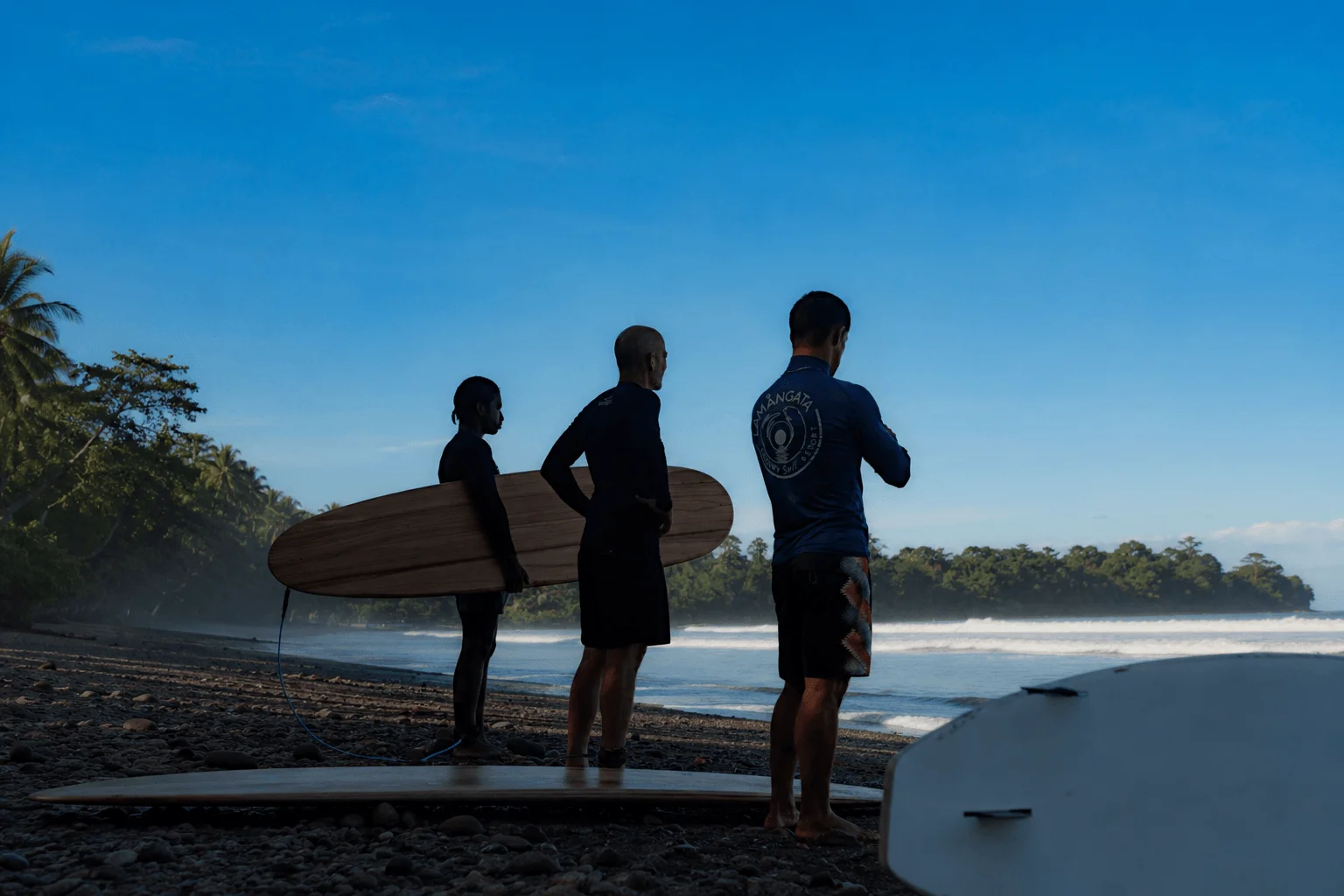
Warm water changes the whole calculation. Dominical Beach is a ten-minute drive down the mountain from us, the water stays warm enough year round that nobody bothers with a wetsuit, and the mornings are gentler than the afternoons once the wind picks up. Nothing here asks you to tough anything out.
We have multiple breaks within easy reach, so we match the conditions to your level and your confidence instead of the other way around. Junior grew up surfing Dominical Beach, and he knows the local surf better than any forecast does. Every morning he reads the tide and the swell and picks the best surf beach for the day, which is how a first-timer and a group of experienced surfers end up in the water at the same time, each of them exactly where they should be.
Speaking to Forbes, Junior said this stretch of coast delivers consistent waves all year. The warm-water places that keep getting recommended to first-timers, Bali and Costa Rica among them, earn it for the same three reasons: forgiving beach breaks, a long season, and water you can happily stay in.
A week with a good instructor, on the right conditions with waves picked for you, is how most adults finally learn.
How the Pool-to-Ocean Method works for a beginner surfer
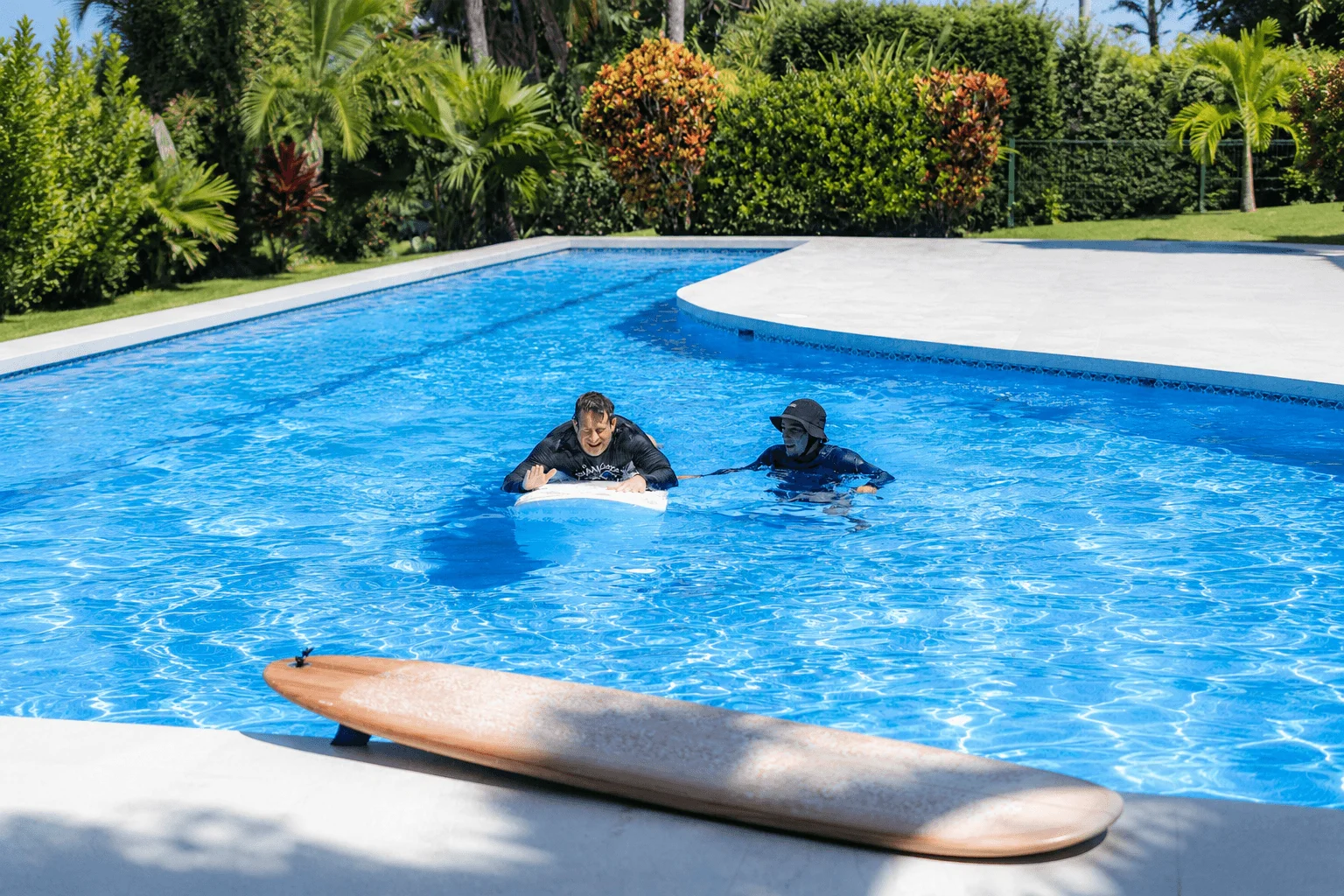
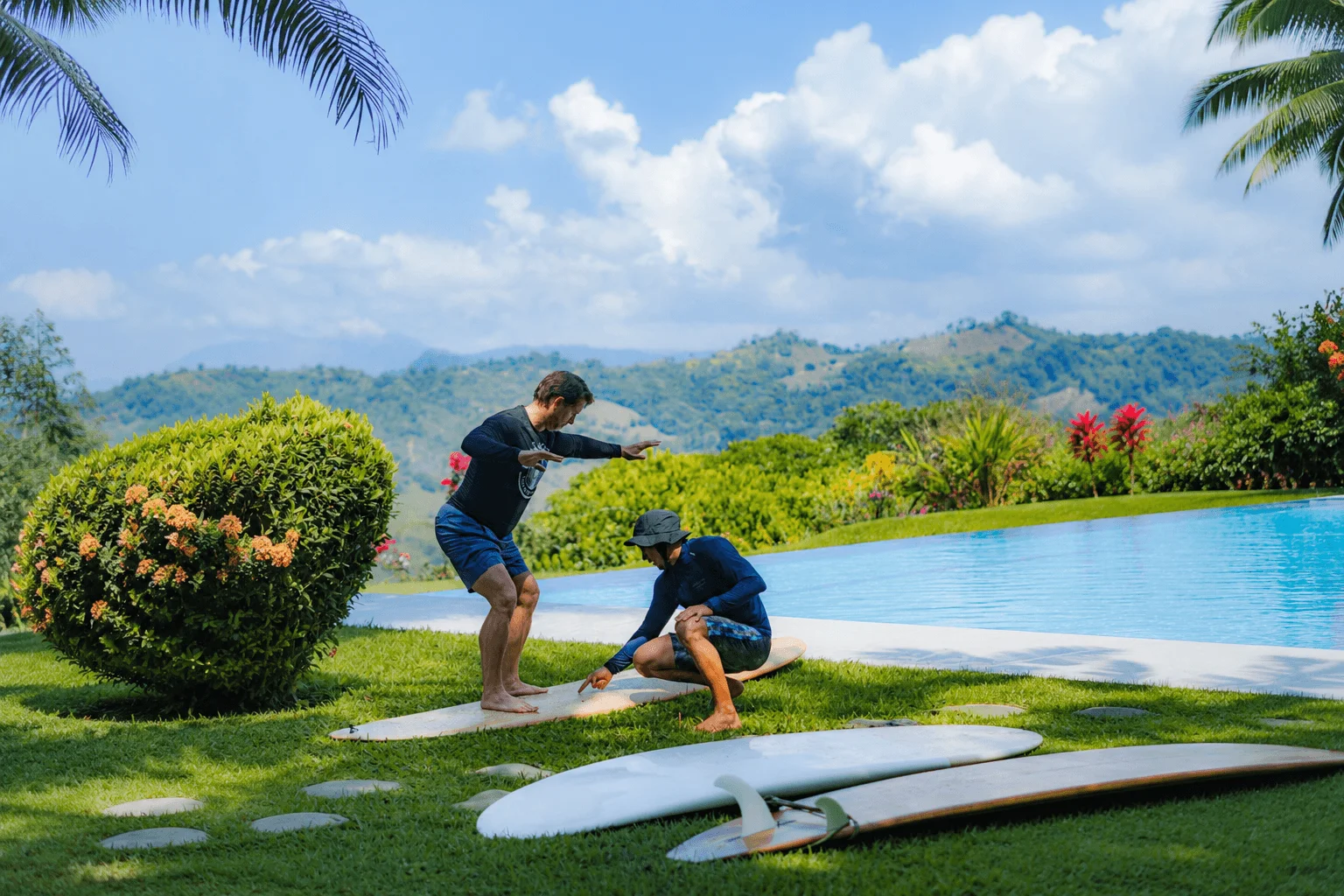
Before you go anywhere near a wave, you warm up in our infinity lap pool with Junior. You practice your pop-up, your paddling, your foot placement, and how your weight shifts, all in flat water where nothing is moving toward you. By the time you paddle out, your body has already done the movement thirty times.
It is a lovely way to start a lesson. You are lying on a board in an infinity pool 1,200 feet above the Pacific, looking down at the water you are about to be in, with hummingbirds flitting in the flowers behind you. There is no audience and no rush.
We choose the right board for your level, and beginners start wide and stable. Every stay includes use of Firewire surfboards, and Junior, a 2024 Costa Rican longboard champion, will make sure you’re comfortable before you take a board into the ocean.
Then the day gets reviewed. The coaching team plays your surf videos back on the big screen in the cozy living room while you sit with something cold, and you see what you did instead of what you felt like you did, which are two different things in week one. You can see how the rest of the coaching fits together on our surf program page.
What a morning at the beach looks like
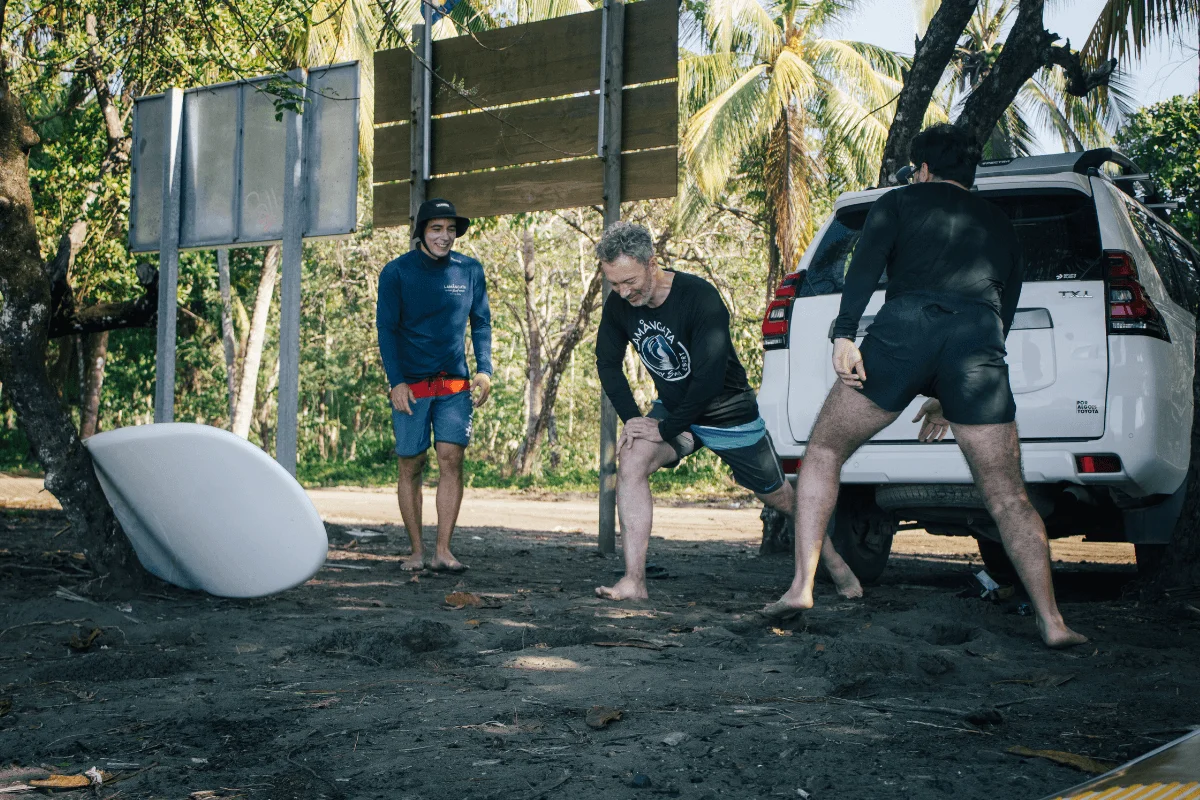
The morning takes care of itself. Boards are loaded and strapped while you finish breakfast, and you ride down the mountain in a chauffeured SUV with Junior reading the water on the way. By the time your feet are in the sand there is a shaded tent up, with chairs, towels, and cold drinks waiting in it.
Afterwards, lunch is brought down and served at the tent while your board dries in the sun, and you sit in the shade watching the next set come through. The SURFER writer who stayed with us built the opening of his feature around the coconut that was waiting for him when he came in.
What progress looks like in your first week
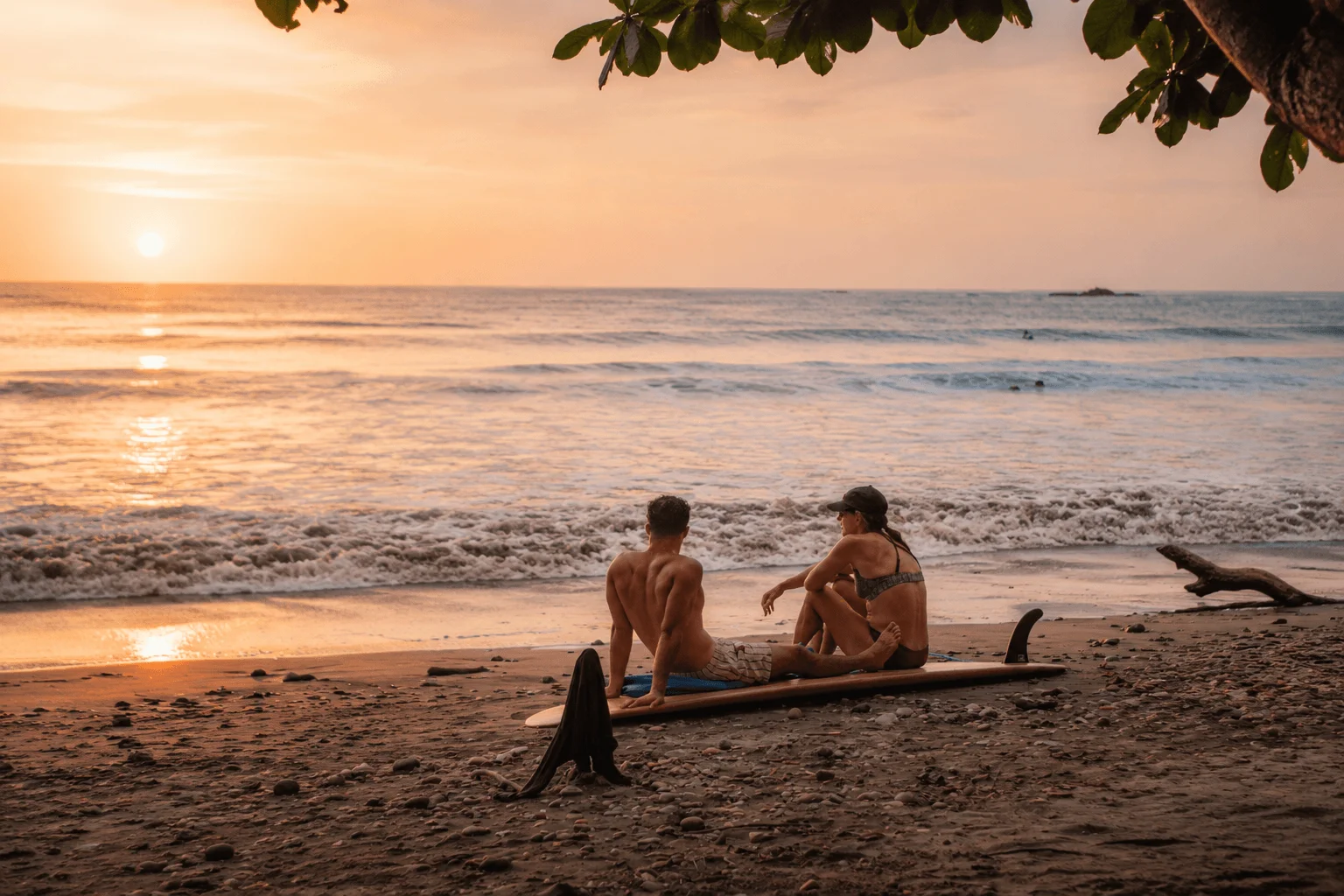
Your first wave will almost certainly be in the white water, the foam left over after a wave has already broken. It is the safest place to learn to stand, and plenty of first-timers manage it inside a session or two. Catching green waves takes longer, because now you are riding unbroken water and you have to be in position before the wave arrives, reading it rather than reacting to it.
That is where the same coach every day starts to compound. One guest arrived with fifteen or twenty hours of instruction behind him from schools in Central America, the US and Europe, able to pop up but only catching waves with a push. He left Lamangata able to catch waves on his own in different conditions, riding waves he had paddled into himself, comfortable in the lineup. Progression is personal and day one is rarely the day it happens. What a week here gives you is time in the ocean that adds up to real skill, even if you are over 40.
Why learning to surf over 40 is worth it
Wondering if you should even bother with surfing if you’re over the age of 40? While we would argue that any idea is worth pursuing, there’s science behind the surf!
In a randomized trial published in BMC Psychiatry in 2023, 96 US service members with major depressive disorder were assigned to six weeks of surf or hike therapy, and clinician-rated depression scores fell from 27.5 to 19.0 across the group. Three months later, 74% of the surf group no longer met the criteria for the diagnosis, against 47% of the hikers. A 2024 review of the controlled trials calls the field promising and still thin, which is a fair description of where the science sits.
Nobody here is prescribing a week away as treatment. What we watch happen is smaller and easier to believe. People sleep, they eat three nutritious and delicious meals, and they spend time investing in themselves in a new skill that they love.
This is exactly what SELF Magazine writer Lucas discovered on his visit at Lamangata. The piece followed how structured sessions, technique drills, and hands-on coaching at Lamangata challenged Lucas both physically and mentally, with clinical sport psychologist Dr. Hilary Cauthen explaining that learning a new physical skill activates the brain’s reward systems and encourages neuroplasticity.
“You get endorphin releases, dopamine hits, and increased synaptic growth,” as Dr. Cauthen put it to SELF, which is a clinical way of describing the face everybody wears on the drive back up the mountain.
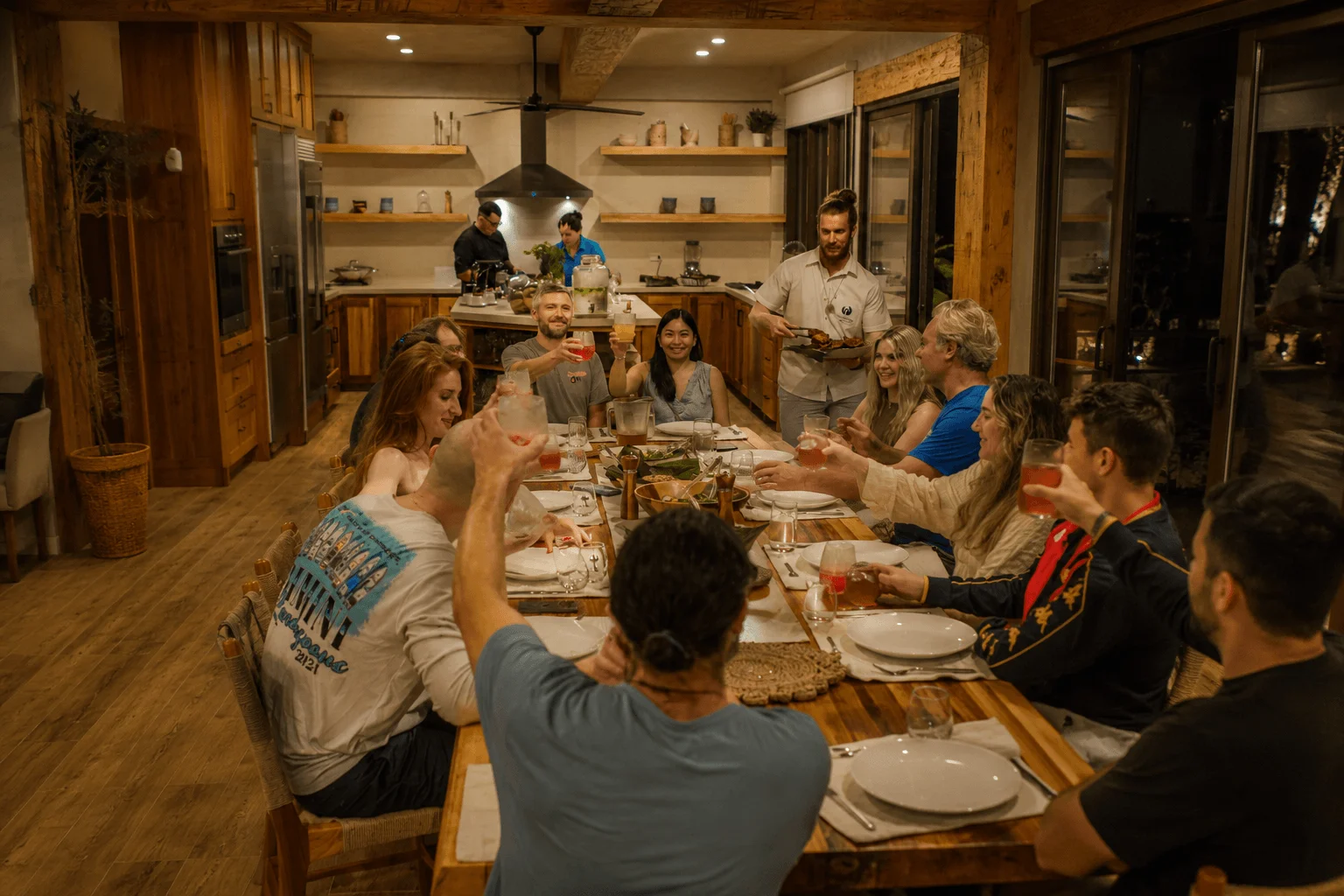
Evenings are the part guests talk about most. Six or eight people at one long table, three courses plated by Chef Tony, fresh juice pressed that morning, and the day’s video up on the screen behind you. A good number of our over-40 guests go home and keep surfing regularly, and some of them love surfing far more than they expected to.
If you want to see what a week at Lamangata looks like before you commit to your first surf trip, read Katherine’s first lesson in her own words, or walk through a day at Lamangata hour by hour.
Top tips for older beginners before the first session
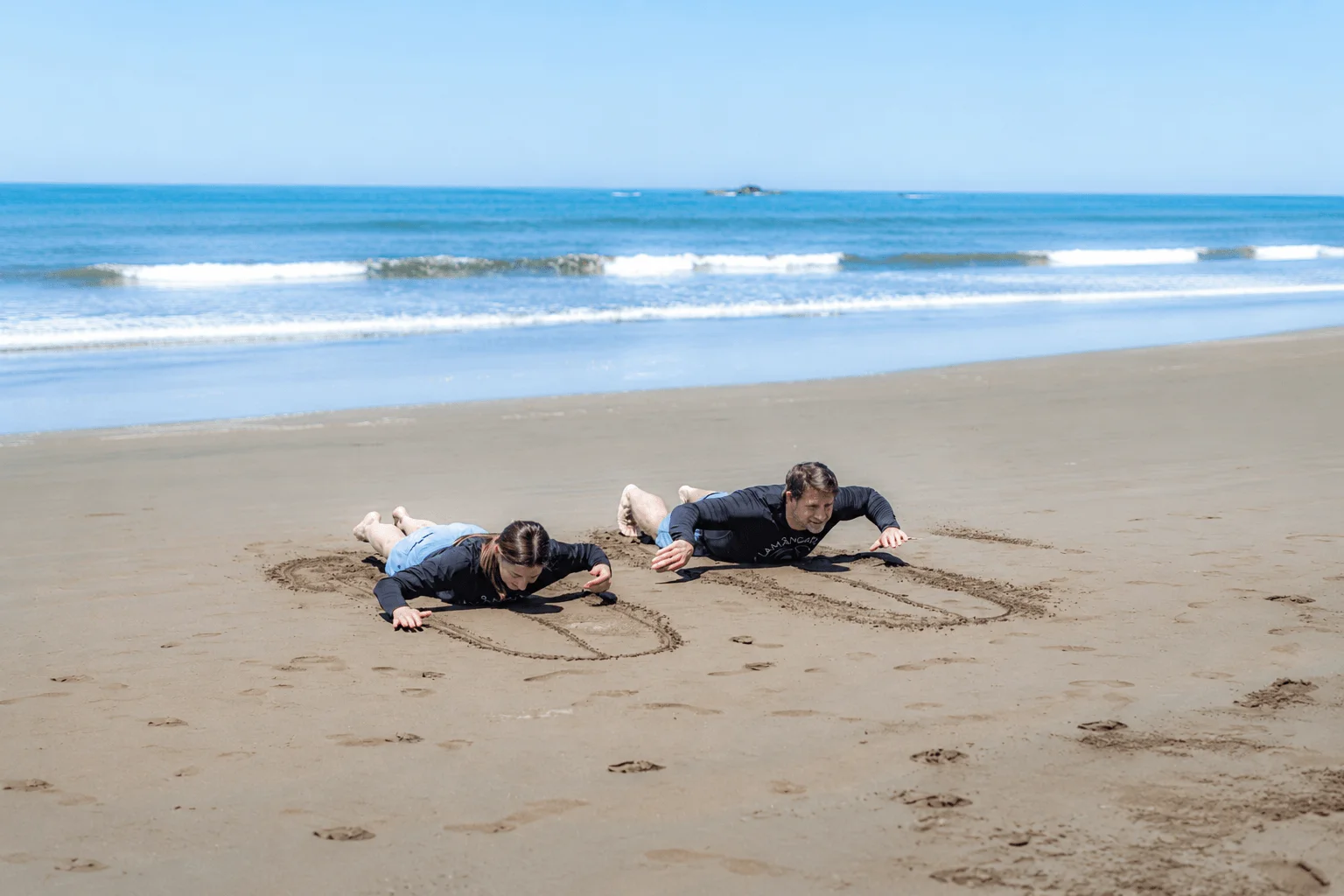
Swim before you come. A few pool sessions in the month beforehand does more for your first session than any amount of dry-land practice, because comfort in water is the thing that lets you listen to a coach.
Take one correction at a time. Junior will give you a single thing to fix each session. Fixing it beats trying to fix everything, and the video makes that obvious quickly.
Learn the surf etiquette early. Knowing who has priority on a wave, and where to paddle back out so you stay clear of the people riding in, does more for your confidence than any amount of fitness. Etiquette is what makes a lineup feel welcoming rather than crowded.
Check dates for a week that fits your schedule
Stays here start at three nights and you can arrive on any day of the week, which matters when your time off refuses to line up with a Saturday-to-Saturday program.
The 3-Night Surf & Adventure Package is where many first-timers start, and any special deals running for your dates are listed on the same page. The resort keeps to six ocean-view suites, so the group around you stays small.
Whether you’re 44 or 74, we can’t wait to help you discover the joy of surfing in Costa Rica!
Frequently Asked Questions
Is there a best age to start surfing?
There is no single best age, and adults who begin in their forties or fifties often progress steadily because they follow coaching and pace themselves. What matters more than age is how many days in a row you get in the water and whether someone is watching your technique. Lamangata coaches guests across every adult age group and starts everyone in the pool.
Am I too old to learn to surf at 50 or 60?
No. The gentle waves on beach breaks near Dominical reward timing and balance far more than strength, and the boards used for first lessons are built for stability. Guests in their 50s and 60s learn here regularly, with sessions matched to their pace and a rest day built in after three consecutive days in the water.
Is Lamangata a surf camp or a surf school?
Lamangata is a six-suite luxury resort where surf coaching is included. Meals, transport to the breaks, coaching, and adventures are all part of our our luxury stays, the resort keeps to six ocean-view suites, so the group around you stays small.
Do beginners start with bodyboarding or whitewater lessons?
Beginners start on a wide, stable foam board and stand up in the shallows first, because soft-top boards forgive the mistakes a hard board punishes. Some coaches use bodyboarding to build wave sense, and Junior will sometimes have you catch a few lying down to feel how a wave picks you up. Your progression follows your own comfort in the water.
Are sessions private or group lessons?
Sessions are personalized rather than run as large group lessons, the resort keeps to six ocean-view suites, so the group around you stays small, and coaching is matched to each person’s level. Couples and friends often go out together with the same coach, and video review afterwards is done individually.
What if my partner does not want to surf?
That works well here. Guests choose from nine included adventures such as waterfall hikes, a hike through Hacienda Baru Wildlife Refuge, and wildlife walks, plus yoga, massage, and the pool, so a non-surfing partner can have an incredible Costa Rica vacation without ever needing to get on a board (though they might want to after they see how fun it is!)
Subscribe to our newsletter and catch all the action from paradise.